
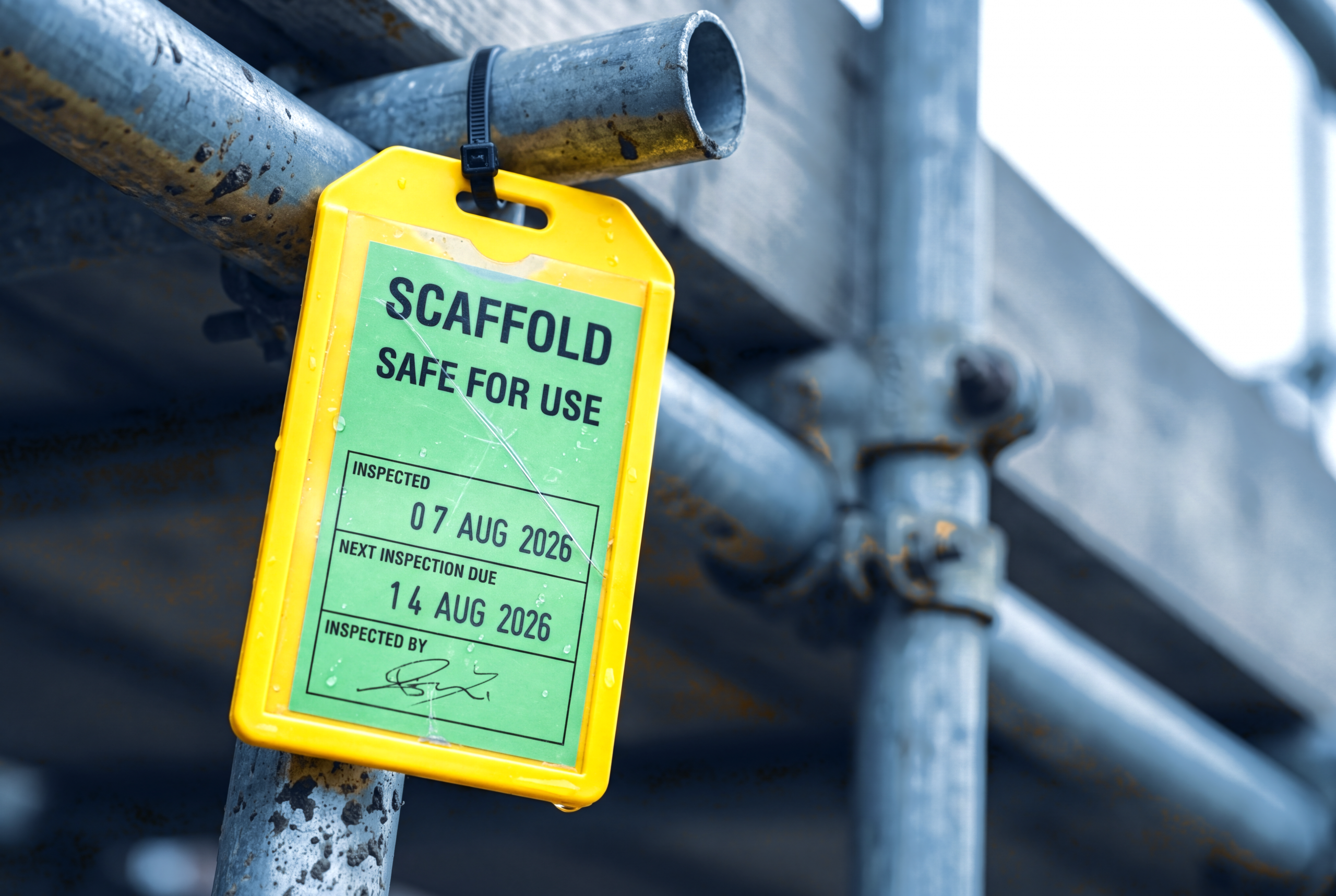
A check tells you what was true when you made it. Assurance asks whether you can still rely on it.
Construction understands this principle particularly well.
A scaffold inspection, fire safety check or building control approval establishes a position at a particular point in time. It does not mean nobody needs to look again when circumstances change.
The same distinction matters in another part of a construction business: the labour supply chain.
A recruitment supplier may have passed due diligence. An umbrella company may have been checked. Employment status may have been assessed.
But what happens next?
Your labour supply chain does not stand still
Suppliers change. Workers move between assignments. New intermediaries can enter the chain. Businesses change ownership or financial position. The way workers are engaged and paid can change too.
A successful onboarding check therefore tells you something important.
It does not tell you everything you need to know six months later.
HMRC makes this clear in its Guidelines for Compliance GfC12 on labour supply chain assurance.
Its recommended approach treats assurance as an ongoing cycle of due diligence, risk assessment, risk management, monitoring and review.
Businesses should understand which organisations make up their labour supply chains, how workers are engaged and paid, and regularly review the chain for changes and risks.
Since April 2026, knowing your chain matters even more
The PAYE rules applying to labour supply chains involving umbrella companies changed on 6 April 2026.
Where the legislation applies, responsibility for ensuring PAYE is operated correctly can sit with the agency holding the contract with the end client. Where there is no agency in the chain, it can sit with the end client.
If the umbrella fails to account for the correct PAYE, HMRC can recover the underpayment from the responsible business.
Read HMRC’s guidance on PAYE rules for labour supply chains involving umbrella companies.
For construction businesses using contractors, subcontractors, recruitment agencies and contingent workers, the question is therefore no longer simply:
“Did we check our suppliers?”
It is:
“Do we know how our labour supply chain is operating now, and can we evidence it?”
This is where OPRaaS operates
OPRaaS gives organisations a structured way to govern and evidence their labour supply chain through the OPRaaS Virtual Compliance Director and the Map, Train, Audit and Evidence platform.
- Map your labour supply chain so you know who is supplying your workforce, through whom and how.
- Train the people responsible for recognising and managing labour supply chain risk.
- Audit suppliers, processes and working practices against the controls your organisation needs.
- Evidence what was checked, what was found, what changed and what action was taken.
The objective is not another certificate, policy document or spreadsheet.
It is to create an audit-ready record of how your labour supply chain is being governed.
Could you evidence your position today?
That is the useful test.
If somebody asked you today to demonstrate who sits within your labour supply chain, how workers are engaged and paid, what checks have been undertaken, what risks have been identified and what happened next, how quickly could you answer?
If the evidence has to be reconstructed from spreadsheets, inboxes, supplier files and different departments, you may have compliance activity.
What you do not necessarily have is readily available assurance.
OPRaaS brings that activity together into a governance and evidence process that the organisation can maintain, demonstrate and own.
Compliance is your asset. Evidenced daily.
Read next
“Why labour supply chain due diligence now has to be continuous, not periodic.”
Drawing on HMRC’s Guidelines for Compliance GfC12 on labour supply chain assurance, and HMRC’s guidance on the PAYE rules for labour supply chains that include umbrella companies from 6 April 2026.
Talk to OPRaaS about your labour supply chain.
Find out how the OPRaaS Virtual Compliance Director can help your organisation Map, Train, Audit and Evidence its labour supply chain. Use the contact form in the sidebar to the right of this article, or email info@opraas.co.uk.
OPRaaS is available to public sector organisations through UK Government Commercial Agency (formerly Crown Commercial Service) frameworks including RM6310 Audit & Assurance Services, Lots 2 and 4, RM6219 Learning & Training Services DPS and RM6237 Learning & Training Services DPS.
This article is editorial commentary by OPRaaS Limited (On-Pay-Roll-as-a-Service), drawing on published government guidance. It provides general information and is not legal, tax, employment or compliance advice. Obligations vary according to the organisation, contractual arrangements and individual circumstances. Appropriate professional advice should be obtained for specific situations.